
 CLICK TO CALL
Blog
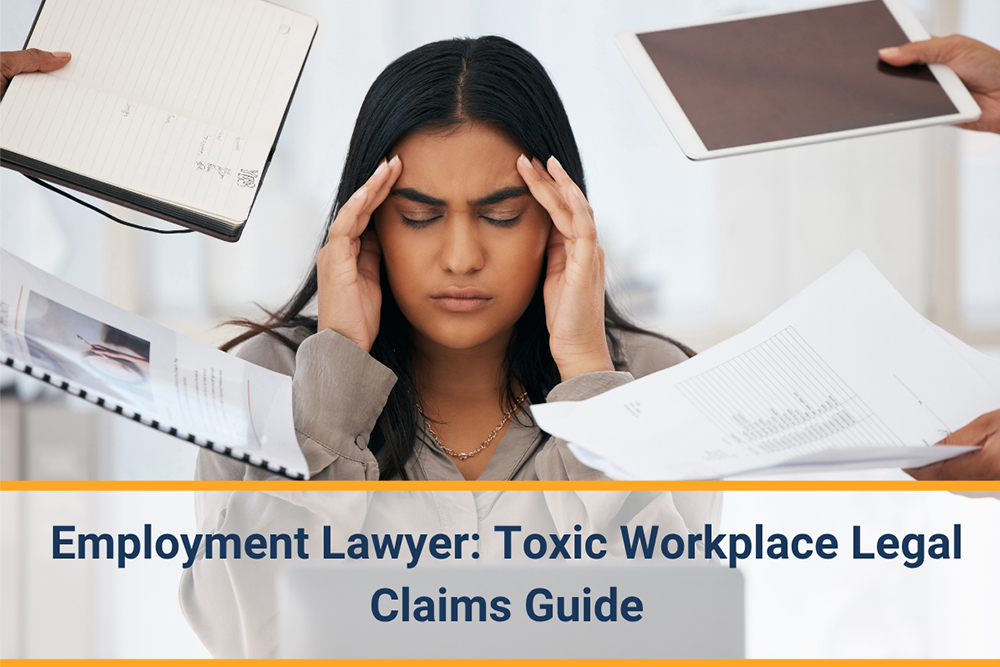
Employment Lawyer: Toxic Workplace Legal Claims Guide
March 22, 2026 Leslie Smith
What Employment Lawyers Define as a Toxic Workplace
As an employment lawyer practicing in Oakville, Ontario, I often advise employees and employers navigating toxic workplace situations. These cases are among the most emotionally charged and legally complex matters I handle. Understanding the legal framework surrounding toxic workplace claims helps both parties make informed decisions about their rights and obligations.
What Employment Lawyers Define as a Toxic Workplace
A toxic workplace involves more than occasional conflict or management disagreements. As an employment lawyer, I explain to clients that legal claims require meeting specific thresholds under Canadian legislation.
A legally actionable toxic workplace typically involves:
- Persistent psychological harassment targeting specific individuals
- Systemic discrimination based on protected human rights grounds
- Deliberate conduct that poisons the overall work environment
- Management participation in or condoning of harmful behaviour
- Documented patterns of abuse rather than isolated incidents
Ontario's Occupational Health and Safety Act defines workplace harassment as engaging in a course of vexatious comment or conduct against a worker. The key word here is "course," meaning repeated behaviour rather than single incidents. As an employment lawyer, I help clients understand this critical distinction.
Employment Lawyer Insights on Legal Thresholds for Claims
Meeting the legal threshold for toxic workplace claims requires more than feeling uncomfortable at work. Canadian courts and tribunals apply specific standards when evaluating these claims.
Key legal thresholds include:
Conduct must be severe or pervasive enough to alter working conditions
A reasonable person must find the environment hostile or abusive
The employer must have known or should have known about the conduct
The employer failed to take appropriate corrective action
The conduct relates to a protected ground under human rights legislation
As an employment lawyer at Leslie J. Smith Law in Oakville, I assess each situation against these thresholds carefully. Many clients are surprised to learn that rude or difficult management behaviour doesn't automatically meet the legal standard. The conduct must cross a specific legal line to support a viable claim.
How Psychological Harassment Creates Employer Liability
Psychological harassment represents one of the most significant sources of employer liability in toxic workplace cases. As an employment lawyer, I've seen organizations face substantial damages from failing to address psychological harassment effectively.
Psychological harassment includes behaviours such as:
- Repeated humiliation or belittling of employees
- Deliberate exclusion from workplace activities or communications
- Unreasonable work demands designed to set employees up for failure
- Spreading false information or rumours about employees
- Threatening or intimidating conduct that creates fear
Employers face liability when they knew about harassment and failed to act. They also face liability when management directly participates in harassing conduct. The Human Rights Tribunal of Ontario has awarded significant damages in psychological harassment cases, including general damages, lost income, and compensation for injury to dignity.
The Poisoned Work Environment Standard
A poisoned work environment differs from individual harassment claims. As an employment lawyer, I explain that this concept addresses systemic workplace culture rather than specific incidents targeting individuals.
A poisoned work environment exists when:
- Discriminatory jokes or comments are tolerated or encouraged
- Offensive materials are displayed or circulated in the workplace
- Management consistently treats certain groups less favourably
- Complaints about discrimination are dismissed or ignored
- The overall atmosphere makes protected groups feel unwelcome
Courts have found that even employees who aren't direct targets of discrimination can claim a poisoned work environment. The pervasive nature of the conduct affects everyone in the workplace. This broader scope of liability surprises many employers who focus only on direct harassment claims.
Employment Lawyer Documentation Strategies for Toxic Workplace Claims
Strong documentation forms the foundation of successful toxic workplace claims. As an employment lawyer, I advise clients to begin documenting concerning behaviour immediately and systematically.
Effective documentation strategies include:
- Maintaining a detailed journal with dates, times, and specific incidents
- Saving relevant emails, text messages, and electronic communications
- Recording names of witnesses present during incidents
- Keeping copies of performance reviews and workplace communications
- Documenting employer responses to complaints and concerns
Contemporaneous documentation carries significantly more weight than reconstructed accounts. Courts and tribunals view real-time records as more reliable than memories recalled months or years later. As an employment lawyer, I've seen strong cases weakened by poor documentation and strong documentation rescue seemingly weak cases.
Building Your Toxic Workplace Claim with Legal Counsel
Working with an experienced employment lawyer from the beginning strengthens toxic workplace claims significantly. Early legal involvement helps preserve evidence, meet procedural requirements, and develop effective legal strategies.
Key steps in building a strong claim include:
- Consulting an employment lawyer before filing any formal complaints
- Understanding applicable limitation periods for different claim types
- Identifying the most appropriate legal forum for your specific situation
- Developing a comprehensive evidence strategy with legal guidance
- Preparing for employer responses and potential retaliation risks
At Leslie J. Smith Law in Oakville, I guide clients through every step of this process. Each toxic workplace situation requires a customized approach based on specific facts and legal considerations. Cookie-cutter strategies rarely produce optimal outcomes in these complex cases.
Employment Lawyer Guidance on Constructive Dismissal in Toxic Workplaces
Many toxic workplace situations eventually lead to constructive dismissal claims. When employers allow toxic conditions to persist, employees may have no choice but to resign. As an employment lawyer, I help clients understand when resignation may constitute constructive dismissal.
Constructive dismissal in toxic workplace contexts occurs when:
- The employer fundamentally breaches the employment relationship
- Working conditions become intolerable due to harassment or discrimination
- The employer fails to address documented toxic workplace complaints
- Management participation makes internal resolution impossible
- Continued employment would cause significant psychological harm
Constructive dismissal claims in toxic workplace cases can result in substantial severance awards. Courts consider the circumstances of the resignation when calculating appropriate notice periods. Bad faith conduct by employers can significantly increase these awards.
Taking Action with an Employment Lawyer
Toxic workplace situations rarely improve without intervention. As an employment lawyer, I consistently advise clients that early action produces better outcomes than waiting for situations to resolve themselves.
Contact Leslie J. Smith at 905-257-7714 for a confidential consultation about your toxic workplace situation. Our Oakville employment law practice provides strategic guidance for employees and employers navigating these challenging circumstances. Taking action today protects your rights and wellbeing for the future.
HR Lawyer Strategies for Managing Difficult Employee Situations
February 22, 2026 Leslie Smith
Managing difficult employees requires more than good intentions and company policies. As an HR lawyer practicing employment law in Oakville, Ontario, I regularly advise employers on navigating complex employee situations while protecting their legal interests. The wrong approach can transform a manageable workplace issue into a costly wrongful dismissal claim.
Understanding when and how to address employee misconduct, insubordination, and performance issues requires careful legal consideration. Each situation demands a strategic response that balances workplace harmony with legal compliance.
Legal Framework for Addressing Insubordination
Insubordination represents one of the most challenging employee situations HR departments face. However, not every act of defiance constitutes legal grounds for discipline or termination. An experienced HR lawyer understands that Canadian courts apply strict standards when evaluating insubordination claims.
True insubordination requires willful disobedience of a lawful and reasonable directive from management. The employee must clearly understand the instruction and deliberately refuse to comply. Isolated incidents of disagreement or questioning management decisions rarely meet this threshold.
Context matters significantly in insubordination cases. Courts consider the employee's length of service, previous disciplinary record, and the circumstances surrounding the incident. An HR lawyer can help employers document these situations properly to support potential disciplinary action.
The response must also be proportionate to the offense. Minor acts of insubordination typically warrant progressive discipline rather than immediate termination. Only severe cases involving safety violations or complete refusal to perform essential job functions may justify termination for cause.
Building Effective Progressive Discipline Systems
Progressive discipline provides a structured approach to addressing employee misconduct while minimizing legal risks. An HR lawyer can design systems that comply with Canadian employment law requirements and case law precedents.
The foundation of any progressive discipline system is clear, written policies. Employees must understand expectations, potential consequences, and the steps involved in the disciplinary process. Ambiguous policies create legal vulnerabilities that skilled employment lawyers can exploit in wrongful dismissal cases.
Documentation becomes crucial at every stage of progressive discipline. Each incident requires detailed records including:
- Dates of the incident
- Witnesses involved
- Specific behaviors observed
- Corrective actions taken
This documentation serves as evidence if the situation escalates to termination or legal proceedings.
The typical progression involves:
- Verbal warnings
- Written warnings
- Suspension
- Termination
However, an HR lawyer can advise when situations warrant skipping steps or accelerating the process. Serious misconduct like theft, violence, or harassment may justify immediate termination without progressive discipline.
When HR Lawyers Recommend Termination for Cause
Termination for cause represents the most severe disciplinary action available to employers. It allows dismissal without notice or severance pay, but the legal threshold is extremely high. An HR lawyer must carefully evaluate whether the circumstances truly justify this approach.
Canadian courts require that misconduct be serious enough to fundamentally breach the employment relationship. The behavior must be incompatible with the employee's duties or prejudicial to the employer's business. Single incidents rarely meet this standard unless they involve serious criminal activity or safety violations.
The concept of a culminating incident applies when an employee's final act of misconduct, combined with their disciplinary history, justifies termination for cause. An HR lawyer can assess whether the progressive discipline record supports this approach and advise on proper documentation requirements.
Timing is critical in termination for cause situations. Employers who delay action after discovering misconduct may be seen as condoning the behavior. An HR lawyer can guide employers through the investigation process and ensure prompt, appropriate responses.
Strategic Approaches to Workplace Misconduct
Different types of misconduct require tailored responses from an HR lawyer perspective. Performance issues demand different treatment than behavioral problems or policy violations. Understanding these distinctions helps employers choose appropriate interventions.
Performance-related misconduct often involves failure to meet established standards despite adequate training and support. An HR lawyer typically recommends performance improvement plans with clear metrics and timelines. This approach demonstrates good faith efforts to help the employee succeed while building a record for potential termination.
Behavioral misconduct includes harassment, discrimination, or creating hostile work environments. These situations require immediate investigation and often involve human rights considerations. An HR lawyer can ensure investigations meet legal standards and protect the employer from liability.
Policy violations range from minor infractions to serious breaches of trust. An HR lawyer evaluates each situation based on the policy's importance, the employee's knowledge of the rule, and the potential impact on workplace operations.
Protecting Employer Interests During Difficult Situations
Managing difficult employees involves balancing multiple legal obligations. Employers must respect human rights legislation, employment standards, and common law requirements while maintaining workplace order. An HR lawyer helps navigate these competing interests.
Accommodation duties complicate many employee situations. What appears to be misconduct may actually relate to disability, family status, or other protected grounds. An HR lawyer can identify when accommodation obligations apply and ensure proper processes are followed.
Privacy considerations also affect how employers can investigate and document employee issues. An HR lawyer advises on permissible surveillance, information gathering, and record keeping while respecting employee privacy rights.
Union environments add another layer of complexity to employee management. Collective agreements often modify standard disciplinary procedures and require specific steps. An HR lawyer familiar with labor relations can ensure compliance with both contractual and legal obligations.
Getting Professional HR Lawyer Guidance
Complex employee situations benefit from early legal intervention. Waiting until problems escalate increases legal risks and limits available options. An HR lawyer can provide strategic guidance that prevents minor issues from becoming major liabilities.
At Leslie J Smith Law, located at 1540 Cornwall Rd #105, Oakville, ON L6J 7W5, I help employers develop effective strategies for managing difficult employee situations. My experience in employment law and dispute resolution enables me to provide practical solutions that protect your business interests.
Contact me at 905-257-7714 or leslie@lesliejsmithlaw.com to discuss your employee management challenges. An HR lawyer consultation can help you navigate these complex situations while minimizing legal risks and maintaining workplace productivity. You may also contact us to get started.
Legal Disclaimer
This blog post is provided for informational purposes only and does not constitute legal advice. Every employment situation is unique, and the information contained herein may not apply to your specific circumstances. The content should not be relied upon as a substitute for professional legal counsel. If you are dealing with difficult employee situations, please consult with a qualified HR lawyer to discuss the specific facts of your case and obtain advice tailored to your situation. Reading this blog does not create a lawyer-client relationship between you and Leslie J Smith Law.
Archive
March 22, 2026 | Leslie Smith
February 22, 2026 | Leslie Smith
January 22, 2026 | Leslie Smith
December 5, 2025 | Leslie Smith
November 20, 2025 | Leslie Smith
October 19, 2025 | Leslie Smith
September 19, 2025 | Leslie Smith
August 6, 2025 | Leslie Smith
July 17, 2025 | Leslie Smith
June 12, 2025 | Leslie Smith

May 11, 2025 | Leslie Smith
April 8, 2025 | Leslie Smith
March 8, 2025 | Leslie Smith
February 5, 2025 | Leslie Smith

January 25, 2025 | Leslie Smith
January 11, 2025 | Leslie Smith

December 10, 2024 | Leslie Smith

December 5, 2024 | Leslie Smith

November 9, 2024 | Leslie Smith

October 18, 2024 | Leslie Smith
July 14, 2022 | Leslie Smith

April 22, 2022 | Leslie Smith